Gas Line Repair & Inspection in East Flushing, Queens
From scheduled NYC Local Law 152 building compliance inspections and gas pressure decay tests to new boiler fuel connections and appliance piping repairs, our licensed technicians ensure complete code compliance and safety.
MANDATORY GAS EMERGENCY NOTICE
If you smell natural gas (a pungent rotten-egg odor), hear hissing near gas pipes, or suspect a gas leak:
- Leave the building immediately with all occupants. Do not stop to open windows or collect belongings.
- Do NOT touch any electrical light switches, thermostats, doorbells, or telephone equipment. Do NOT strike matches or start vehicles. Any electrical spark can ignite gas.
- From a safe distance outdoors, call 911 or the local gas utility (National Grid at 718-643-4050) immediately.
- Do not re-enter the building until emergency responders and utility crews declare it safe. Never attempt to locate or repair a gas leak yourself.
Warning Signs of Compromised Gas Piping
Natural gas fuels central heating boilers, domestic water heaters, and cooking appliances across East Flushing. While gas provides dependable heating throughout harsh Queens winters, gas distribution lines require strict maintenance and code compliance. Black iron gas piping can deteriorate over decades, particularly in damp basement environments where moisture accelerates external rust pitting and pipe joint compound dries out.
Warning signs of compromised piping include subtle rotten-egg sulfur odors near meter banks, flaking scale on exposed pipe runs, dead vegetation in localized lawn patches above underground service entries, or hissing sounds near appliance valves. Gas supply issues directly compromise heating plant operations; if your burner shuts down or exhibits yellow sooting flames, our technicians evaluate both the piping network and central boiler repair in East Flushing.
Appliance Gas Connections & Code-Compliant Piping
Connecting a new heating boiler, direct-fired water heater, or commercial-style kitchen range requires far more than threading pipe together. Under the NYC Fuel Gas Code, all gas work must follow strict parameters:
- Proper Pipe Sizing & Volume: Gas piping must deliver adequate cubic feet per hour (CFH) at standard low-pressure operating thresholds (typically 5 to 7 inches water column). Undersized lines starve modern high-input boilers, causing burner flame instability.
- Dedicated Appliance Shut-Off Valves: Every gas appliance must feature an approved, accessible full-port brass quarter-turn ball valve within six feet of the equipment, accompanied by an approved sediment trap (drip leg) to collect debris before it enters the gas control valve.
- Rigid Black Steel vs. CSST: While corrugated stainless steel tubing (CSST) is permitted in specific configurations, New York City mandates strict bonding, grounding, and physical protection standards to safeguard against puncture or electrical arching.
Pressure Decay Testing & Electronic Leak Detection
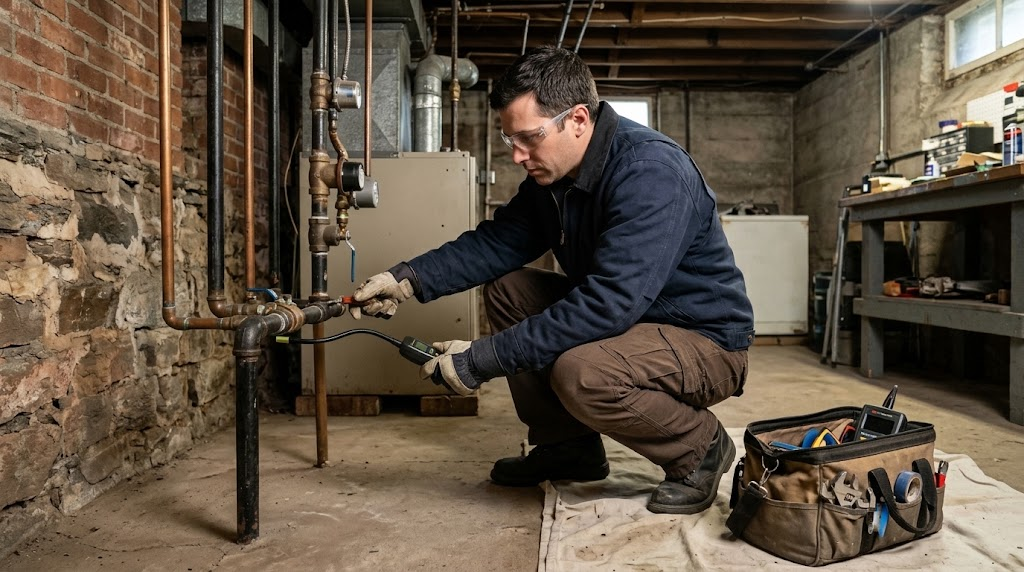
Locating tiny gas leaks requires specialized diagnostic equipment. Our certified technicians utilize intrinsic electronic combustible gas sniffers to check meter connections, unions, and regulator vents. To confirm total gas piping integrity, we execute a high-precision pressure decay test: the line is isolated, capped, and charged with air or nitrogen to a specified test pressure (typically 3 to 15 PSI depending on NYC DOB job filings). A calibrated test gauge monitors pressure over a documented period—any drop indicates a leak that must be traced and corrected before gas service can be activated.
NYC Local Law 152 Inspection Applicability
Enacted to improve building safety across New York City, Local Law 152 of 2016 mandates periodic inspections of exposed gas piping systems. Understanding how this law applies to your East Flushing property is critical:
- Applicable Buildings: Local Law 152 applies to all buildings in New York City with gas piping systems, except standalone one- and two-family private homes classified as R-3 residential occupancy. Multi-family apartment buildings, mixed-use commercial properties, and residential cooperatives must complete inspections once every four years based on their Queens Community District schedule.
- Qualified Inspectors: Inspections must be performed by or under the direct supervision of a Licensed Master Plumber (LMP) who has completed required DOB training.
- Filing & Certification: Following inspection, the LMP delivers an official inspection report (GPS1 form) identifying any non-compliant conditions or hazardous conditions. The building owner must submit the certification (GPS2 form) to the NYC Department of Buildings within 60 days.
The Critical Need for Qualified, Legally Authorized Professionals
Gas work is never a DIY task. In New York City, it is illegal for unlicensed individuals, handymen, or building owners to install, modify, or repair gas piping. Faulty gas connections pose severe risks of explosion, fire, and toxic carbon monoxide poisoning. Whether connecting a new heating system, replacing an aged gas meter header, or installing a high-capacity water heater, our team ensures every fitting is code-compliant, pressure-tested, and officially permitted.
Frequently Asked Questions About Gas Line Repair & Inspection
Evacuate the premises immediately without operating light switches, electrical appliances, or landline phones. Once safely outdoors at a distance, call 911 or the local gas utility (National Grid) immediately. Never search for gas leaks yourself or attempt repairs.
NYC Local Law 152 mandates that gas piping systems in all buildings—except standalone one- and two-family homes (R-3 occupancy)—must be inspected by a Licensed Master Plumber once every four years according to a community district schedule set by the NYC Department of Buildings.
Technicians use calibrated combustible gas sniffer sensors and perform an official high-resolution pressure decay test. The gas supply is isolated and the piping is pressurized with air or nitrogen using a certified test gauge to confirm zero pressure drop over an established timeframe.
No. Under the New York City Fuel Gas Code, all gas piping installation, modification, testing, and connection must legally be executed by a Licensed Master Plumber holding the appropriate city certifications.
Schedule Gas Piping Testing & Inspection
Ensure your building gas lines comply with NYC codes. Speak directly with our certified heating and gas technicians today.