Water Heater Repair in East Flushing, Queens
From sudden cold showers and extinguished pilot lights to leaking relief valves and sediment-clogged storage tanks, our experienced plumbing technicians deliver accurate troubleshooting and fast water heater repairs throughout East Flushing.
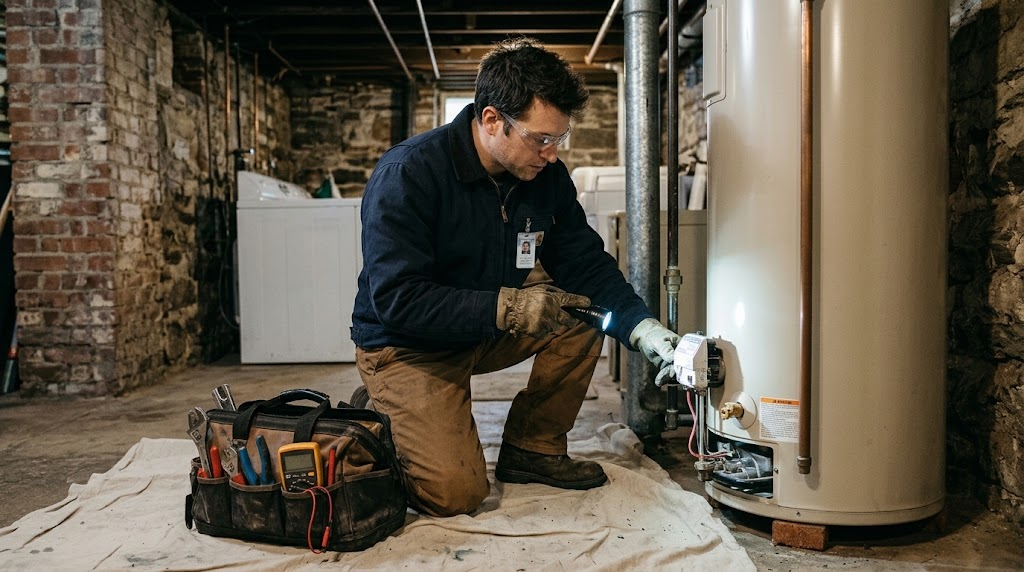
No Hot Water & Inconsistent Tap Temperatures
Running out of hot water prematurely or turning on the bathroom faucet only to find ice-cold water is a severe disruption for any Queens household. In East Flushing, where multi-generational families and residential buildings require high volumes of domestic hot water daily, water heaters operate under constant demand.
Temperature fluctuations often point to failing heating elements, broken dip tubes, or heavy mineral scale accumulation. When a cold-water dip tube cracks inside the storage tank, incoming cold municipal water mixes immediately with hot water at the top of the tank rather than being directed to the bottom heating zone. As a result, you only receive two or three minutes of hot water before the flow turns lukewarm. Understanding whether the root problem is an isolated water heater failure or connected to a central boiler repair in East Flushing ensures the right equipment is serviced.
Gas vs. Electric Water Heater Diagnostic Differences
The diagnostic procedure depends heavily on whether your equipment burns natural gas or uses electric heating elements:
- Atmospheric & Power-Vent Gas Water Heaters: Issues usually center on the pilot assembly, thermocouple, gas valve thermostat, or flue draft. If the thermocouple fails to generate the required 20 to 30 millivolts when heated by the pilot flame, the safety valve snaps shut to prevent unburned gas from accumulating. Gas lines and draft hoods must also be inspected in accordance with our gas line repair and safety standards.
- Electric Water Heaters: These units utilize upper and lower immersed resistance heating elements controlled by individual thermostats. When an upper element burns out, you experience zero hot water. If only the lower element fails, the unit will produce some hot water, but recovery time will be excessively slow and the volume will feel inadequate.
Indirect Water Heaters Connected to Boilers
Many East Flushing properties utilize an indirect water heater rather than a freestanding appliance. An indirect water heater has no dedicated gas burner; instead, hot boiler water is pumped through an internal corrugated coil inside a heavily insulated storage tank. If an indirect system stops delivering hot water, the fault often lies with the boiler's zone circulator pump, the aquastat relay, or internal coil scale coating rather than the storage tank itself.
Leaking Tanks, Fittings & Safety Valves
Water pooling around the base of your heater requires prompt investigation. Pinpointing the origin determines whether a simple repair is possible:
- Temperature and Pressure Relief (T&P) Valve: This critical safety valve discharges water if internal pressure exceeds 150 PSI or temperature passes 210°F. If the valve drips constantly, it may be weakened by mineral scale or signaling thermal expansion issues in closed plumbing systems.
- Threaded Brass Nipple & Dielectric Union Leaks: Supply connections on top of the tank can develop minor seepage from galvanic corrosion where copper pipes meet galvanized steel tank fittings. Replacing these connections with dielectric fittings stops the leak immediately.
- Drain Valve Seepage: Plastic factory drain valves frequently crack or become jammed with lime scale, causing water to drip onto the basement floor. Installing a full-port brass drain valve resolves the issue cleanly.
When a Leaking Tank Warrants Full Replacement
While external valves, circulator pumps, and heating elements can be repaired or swapped, a leak originating from the inner tank body cannot be patched. Residential water heaters feature a glass-lined steel vessel protected by a sacrificial magnesium or aluminum anode rod. Over eight to twelve years, the anode rod dissolves completely, allowing minerals in the city water to attack the steel shell. Once rust penetrates the tank wall, water escapes beneath the metal jacket insulation, indicating irreversible failure and the immediate need for tank replacement.
Sediment Buildup & Tank Flushing Benefits
Over time, naturally occurring calcium and magnesium minerals precipitate out of the heated water and settle at the bottom of the tank. In gas heaters, this creates a thick insulating blanket between the flame and the water, overheating the tank bottom and generating loud popping sounds. Annual drain flushes remove loose sediment, improving recovery efficiency and protecting fixture performance across your home. If recurring leaks also affect your sinks and showers, review our plumbing fixture repair services.
Frequently Asked Questions About Water Heater Repair
A pilot light that refuses to stay lit is commonly caused by a worn or oxidized thermocouple, a defective thermal cutoff switch, a clogged pilot orifice tube, or a compromised gas control valve. Our technicians test millivolt electrical outputs and clean burner assemblies.
If water is dripping from threaded brass fittings, copper supply lines, or the temperature and pressure relief (T&P) valve, repairs are straightforward. However, if water is weeping from the lower tank body or underneath the jacket insulation, the inner steel liner has rusted through and the entire water heater must be replaced.
An indirect water heater does not have its own gas burner or electric elements. Instead, it utilizes hot water circulated from your central heating boiler through an internal heat exchanger coil to heat domestic tap water. It functions as a highly efficient separate heating zone.
Rumbling, popping, or kettle-like sounds are caused by thick mineral sediment buildup at the bottom of the tank. As the burner heats the metal floor, trapped water pockets under the calcified crust boil violently, creating steam bubbles that burst through the sediment.
Restore Reliable Domestic Hot Water Today
No hot water or noticing leaks near your water heater? Speak directly with a qualified Queens plumbing technician now.