Steam Heat & Radiator Repair in East Flushing, Queens
From banging water hammer and hissing air vents to stubborn cold cast-iron radiators, our steam heating specialists restore balanced comfort, quiet operation, and proper condensate drainage across East Flushing residential properties.
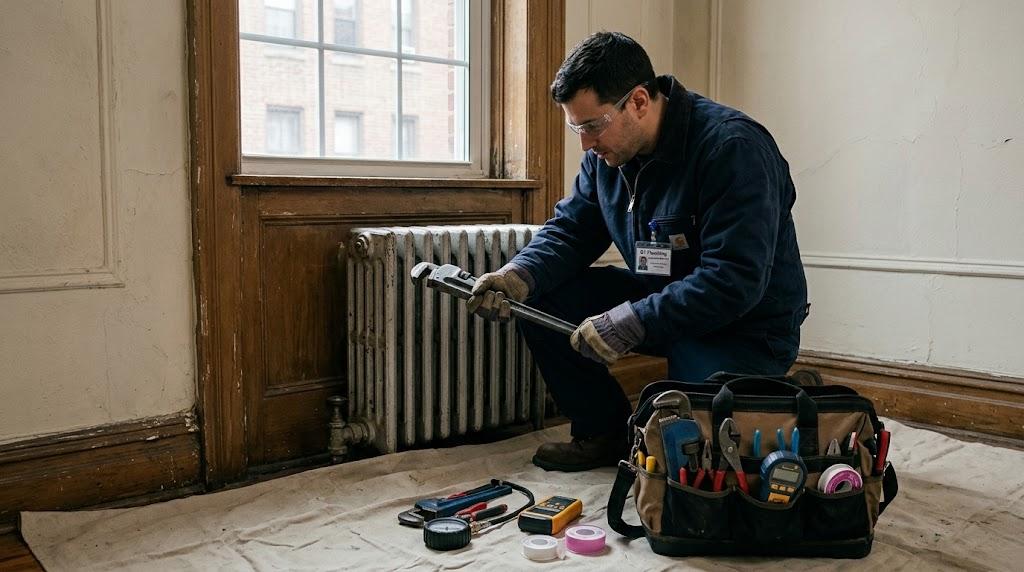
Cold Radiators & Uneven Building Heating
Steam heating remains one of the most reliable and long-lasting heating methods found throughout East Flushing, from brick colonial homes near Kissena Park to multi-story residences along 157th Street. However, when steam systems fall out of calibration, residents frequently experience severe room-to-room temperature imbalances: some rooms feel like a sauna while others suffer with ice-cold cast-iron radiators.
Unlike forced hot water or warm air systems, steam heating relies entirely on thermodynamics and air displacement. When steam begins traveling up from your basement boiler, the piping and radiators are filled with cold air. If that air cannot exit smoothly through functional air vents, steam is physically blocked from entering the radiator. As a result, the radiator stays cold despite your boiler running continuously. Diagnosing whether your heating issue stems from a localized radiator vent failure or an overarching boiler repair in East Flushing requires inspecting pressure settings and distribution lines.
Steam Radiator Valve & Air Vent Problems
Two critical components regulate how individual cast-iron radiators perform:
- Thermostatic Radiator Air Vents: Located on the side opposite the supply pipe, the air vent must remain open to let cool air escape and snap tightly shut when heated steam arrives. Mineral buildup, rust flakes, or old coats of wall paint clog the vent port, leaving the radiator cold. When the internal thermostatic float deteriorates, it fails to seal, spitting scalding water and venting wet steam directly against baseboards and hardwood floors.
- Supply Shut-Off Valves: In single-pipe steam systems, the supply valve must remain either 100% open or 100% closed. When property owners attempt to turn down a radiator by cracking the valve halfway, condensed water cannot roll down past the rising steam. This results in severe packing gland leaks, spitting at the valve stem, and violent knocking.
Banging Pipes and Water Hammer Explained
The alarming, loud metallic banging commonly referred to as water hammer is not merely annoying—it can rupture radiator castings, crack pipe fittings, and flood lower floors. Water hammer occurs when steam traveling at 30 to 60 miles per hour strikes pooled condensate water trapped inside horizontal runouts or radiators. The collision drives high-pressure hydraulic shockwaves through the iron piping.
Incorrect Pipe Pitch & Condensate Drainage
For steam to function quietly and efficiently, gravity must do its job. In a one-pipe steam system, steam flows upward through the valve while condensed water trickles backward through the exact same pipe to return to the boiler. For this return flow to occur, the radiator must maintain a slight, continuous slope downward toward the supply valve.
Over decades, wooden floor joists in Queens homes settle, warping floorboards and causing radiators to tilt backward away from the valve. When a radiator tilts away from its supply valve, water pools at the far end, submerging the air vent and guaranteeing loud banging every time the heating cycle engages. Our technicians shim and re-pitch radiators back toward the supply shut-off valve, correcting drainage lines and eliminating water hammer permanently.
When Radiator Symptoms Indicate Broader Boiler Issues
While an isolated cold radiator often points to a worn air vent, widespread radiator malfunctions across multiple rooms frequently indicate central boiler troubles:
- Excessive Boiler Operating Pressure: Steam systems operate best at low pressures (between 0.5 and 1.5 PSI). If the boiler's pressuretrol switch is miscalibrated or clogged with sediment, high pressure forces air vents shut prematurely, locking cold air inside radiators throughout the house.
- Foaming and Surging Boiler Water: Oily residues, high total dissolved solids, or mineral deposits on the boiler water line cause violent foaming. This pulls dirty boiler water up into the steam mains, flooding the radiators. In such cases, a professional system skimming, chemical flush, or annual boiler maintenance is required.
- Main-Line Vent Failures in the Basement: Steam mains running along basement ceilings utilize oversized quick-vent valves. If these main vents fail, steam takes far too long to reach the vertical risers, causing short boiler firing cycles and cold upstairs radiators.
Frequently Asked Questions About Radiator Repair
Loud knocking or banging—known as water hammer—occurs when rising high-velocity steam collides with pools of trapped, cooled water inside the radiator or supply riser. This is typically caused by incorrect pipe pitch, a clogged air vent, or a partially closed radiator supply valve.
In a steam heating system, steam cannot enter a radiator until the trapped cold air inside is expelled. If the radiator's thermostatic air vent is corroded, painted shut, or blocked with mineral scale, air cannot escape and steam is blocked from entering.
No. On a one-pipe steam system, the radiator shut-off valve must be fully open or fully closed. Throttling the valve halfway restricts the narrow passage where steam rises and condensed water drains, creating violent water hammer and severe valve stem leaks.
A sputtering or continuously hissing vent indicates internal float mechanism failure or scale obstruction. When the thermal float fails, it cannot seal once steam fills the chamber, allowing steam and condensed water to escape directly into your room.
Restore Quiet, Balanced Radiator Heat Today
Eliminate violent banging, hissing vents, and cold rooms. Speak with a local Queens steam heating technician now.